
More East Suffolk Lines Stations ‘Wildlife Friendly’ Accredited
Halesworth and Trimley are the latest East Suffolk Lines stations to receive ‘Wildlife Friendly’ accreditation, recognising efforts to support biodiversity and nature. Station adopter volunteers at both stations received the awards following an assessment by an ecologist to determine how well the station supports local flora and fauna.
Train operator Greater Anglia has partnered with the region’s Wildlife Trusts to formally recognise the efforts of its teams of station adopter volunteers to create wildlife havens at stations across its network, through the ‘Greater Anglia Wildlife Friendly Stations Accreditation Scheme.’
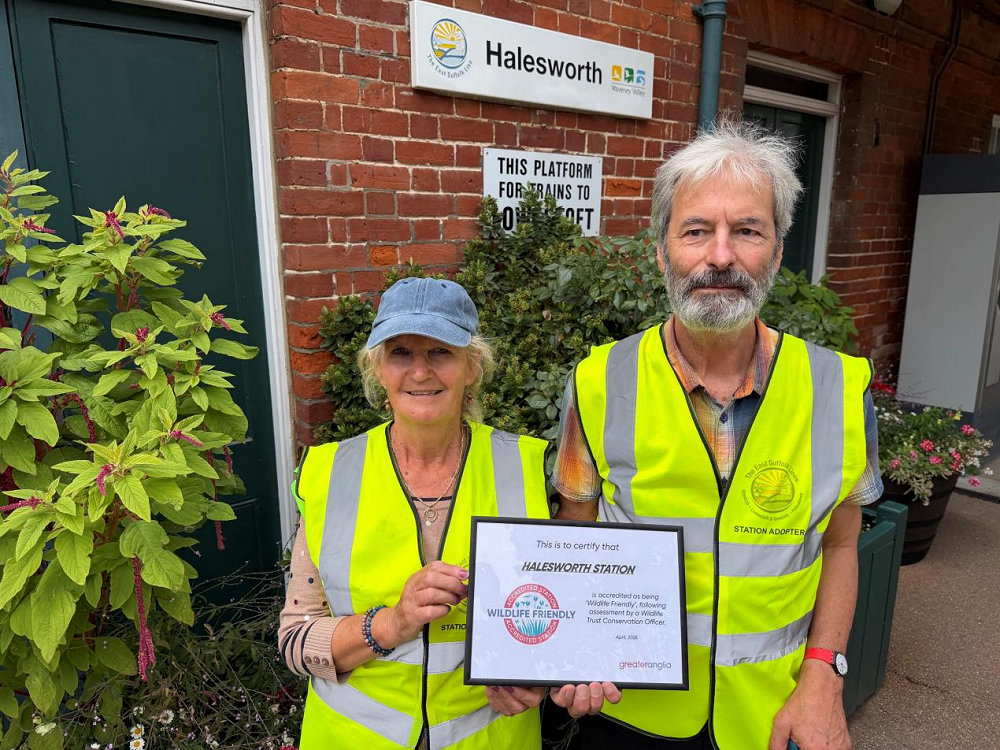
The ecologist’s report for Halesworth praised the station adopter team – Charles Keyes, Moyra Rogers and Valerie Rutterford – for “the addition of planters at strategic locations which has provided good opportunity to brighten up the platform and at the same time offer benefits to biodiversity.” The report identified many plants around the station that provide a food source for pollinators.
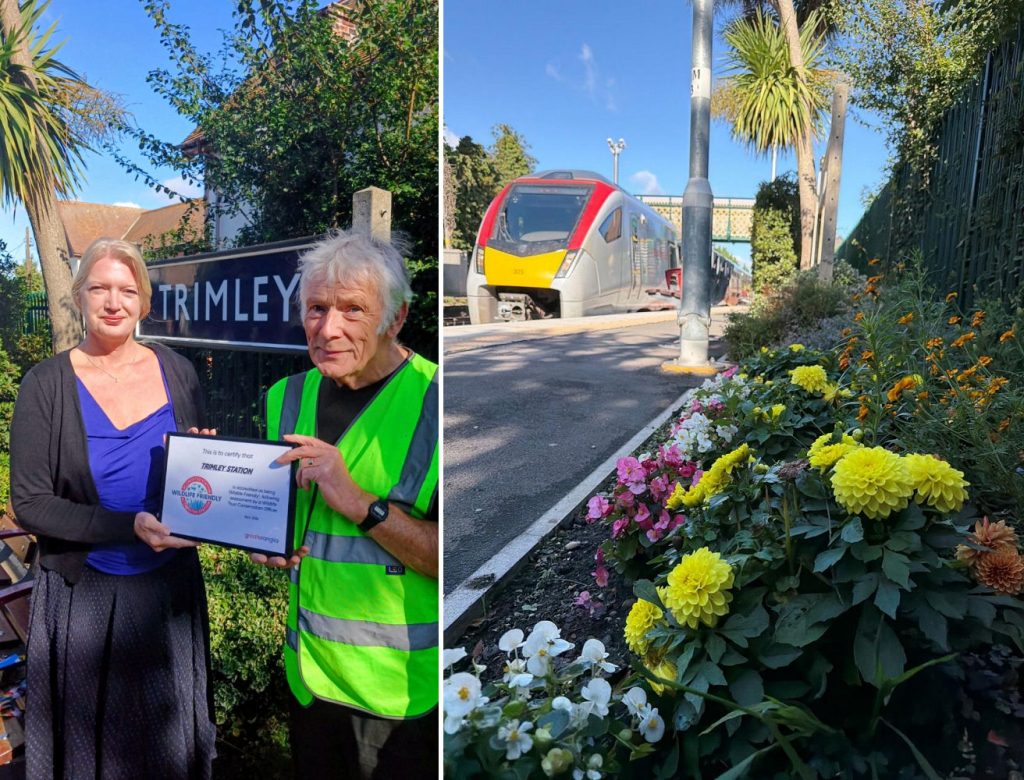
At Trimley the ecologist noted the “visible insect activity with certain plants attracting disproportionate attention – in particular catmint on which was found, mint month, 7 spot ladybird and common carder bee – due to the adopter’s efforts to provide patches of bare ground and soil for nesting and overwintering, as well as a good balance of semi-permanent planting with shrubs together with more floriferous annuals and perennial garden plants.”
Both stations are also supported by the East Suffolk Lines Community Rail Partnership.
James Hogg, Development Officer at the Norfolk Wildlife Trust, the lead Trust for the initiative, said:
“This project with Greater Anglia, now in its fifth year, is a fantastic example of how people can transform nature-poor areas into new nature-rich places – and change the way we think about land, seizing opportunities to help nature outside traditional nature reserves.”
Each assessment also offers tips and advice for how to make the stations more wildlife friendly and the reports can also be used as examples of best practice, to help spread good ideas around all Greater Anglia’s stations.
Greater Anglia’s Customer and Community Engagement Manager, Alan Neville, said,
“We are delighted to partner with the region’s wildlife trusts to formally recognise the valuable work of our station adopter volunteers in supporting wildlife and improving their local environment.”
Rail stations across East Anglia are increasingly becoming havens for local wildlife thanks to the efforts of more than 340 volunteers who last year transformed over 10,000 square metres of land into thriving wildlife gardens.
A recent survey showed a wide range of creatures visiting Greater Anglia stations, including many different types of butterflies as well as bees, slow worms, bats, foxes, toads, lizards, deer, and many varieties of birds.
Over the past 20 years, Greater Anglia’s station adopter initiative has seen the vast majority of its stations taken on by volunteers. The ongoing increases in the areas adopted and the wildlife being seen on the stations demonstrates the positive role adopters are having to make stations more biodiverse, as well as becoming more attractive gateways to the communities they serve.