
Melton Station Awarded ‘Wildlife Friendly Station’ Status
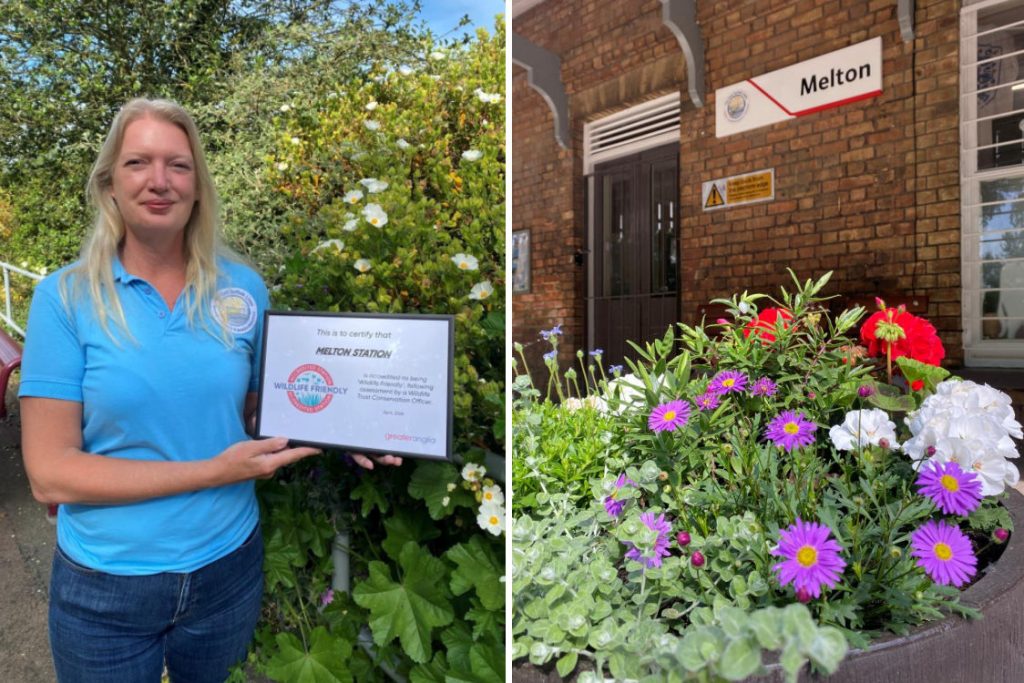
Melton station has received ‘Wildlife Friendly’ accreditation status, recognising efforts to support biodiversity within the station confines.
An ecologist’s report noted a wide range of native plants and shrubs growing around the station, which are beneficial to pollinating insects and also provide cover for birds and hedgehogs. An area along the station platform was extensively planted with the native species back in 2018 by community volunteers with a grant from Community Rail Network; additional areas were added and tended to over the past 8 years.
Thalia Woodgate, officer for the East Suffolk Lines Community Rail Partnership and former adopter at the station received the award.
The accreditation scheme is a partnership between train operator Greater Anglia and the region’s Wildlife Trusts; it is designed to formally recognise the achievements of teams of volunteer station adopters to create wildlife havens at stations across the GA network.
Melton recently welcomed two new adopters, husband and wife team Fiona and Christopher Fletcher who created floral displays in the station’s flower tubs.
James Hogg, Development Officer at the Norfolk Wildlife Trust, the lead Trust for the initiative, said:
“This project with Greater Anglia, now in its fifth year, is a fantastic example of how people can transform nature-poor areas into new nature-rich places – and change the way we think about land, seizing opportunities to help nature outside traditional nature reserves.”
Each assessment also offers tips and advice for how to make the stations more wildlife friendly and the reports can also be used as examples of best practice, to help spread good ideas around all Greater Anglia’s stations.
Greater Anglia’s Customer and Community Engagement Manager, Alan Neville, said,
“We are delighted to partner with the region’s wildlife trusts to formally recognise the valuable work of our station adopter volunteers in supporting wildlife and improving their local environment.”
Rail stations in East Anglia are increasingly becoming havens for local wildlife thanks to the efforts of more than 340 volunteers who last year transformed over 10,000 square metres of land into thriving wildlife gardens.
In a recent survey, Greater Anglia station adopters reported a wide range of creatures visiting their stations, including many different types of butterflies as well as bees, slow worms, bats, foxes, toads, lizards, deer, and many varieties of birds.
Over the past 20 years, since the start of the station adoption programmer in East Anglia, the initiative has seen the vast majority of Greater Anglia stations adopted by volunteers. The ongoing increases in the areas adopted and the wildlife being recorded on the stations has demonstrated how the adopters play a large part in helping to make stations more biodiverse, as well as more attractive gateways to the communities they serve.